THE DIRTY DOZEN

The Dirty Dozen is a 1967 war film directed by Robert Aldrich and starring Lee Marvin, with an ensemble supporting cast including Ernest Borgnine, Charles Bronson, Jim Brown, John Cassavetes, Richard Jaeckel, George Kennedy, Trini Lopez, Ralph Meeker, Robert Ryan, Telly Savalas, Clint Walker and Robert Webber. Set in 1944 during World War II, the film follows a penal military unit of twelve convicts as they are trained as commandos by the Allies for a suicide mission ahead of the Normandy landings.
The screenplay is based on the 1965 bestseller by E. M. Nathanson, which in turn was inspired by a real-life World War II unit of behind-the-lines demolition specialists from the 101st Airborne Division named the “Filthy Thirteen“. Filming took place at the MGM British Studios.
The Dirty Dozen was released on June 15, 1967 by Metro-Goldwyn-Mayer, and was a box office success, grossing $45 million against a $5M budget. It won the Academy Award for Best Sound Editing at the 40th Academy Awards. In 2001, the American Film Institute placed it at number 65 on their 100 Years… 100 Thrills list.[5] The film spawned several television film sequels, including The Dirty Dozen: Next Mission (1985), The Dirty Dozen: The Deadly Mission (1987), and The Dirty Dozen: The Fatal Mission (1988). A remake was announced in 2019 by Warner Bros.[6][7]
DOWNLOAD
PLATOON
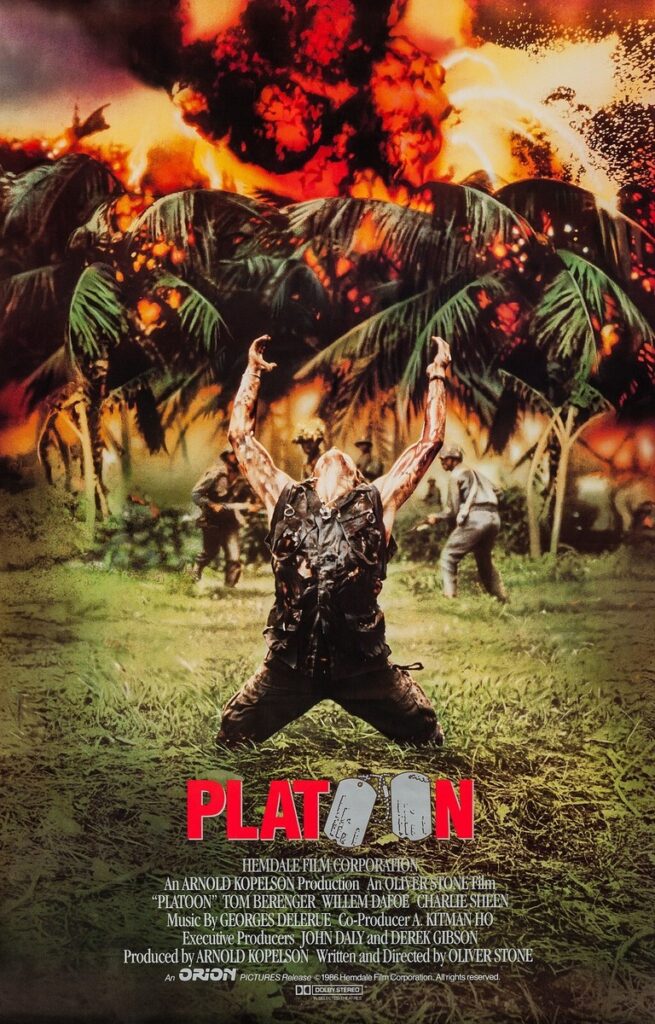
Platoon is a 1986 American epic war film written and directed by Oliver Stone, starring Tom Berenger, Willem Dafoe, Charlie Sheen, with supporting roles by Forest Whitaker, Francesco Quinn, John C. McGinley, Richard Edson, Kevin Dillon, Keith David, Reggie Johnson, Johnny Depp, Mark Moses, Chris Pedersen and Tony Todd. It is the first film of a trilogy of Vietnam War films directed by Stone, followed by Born on the Fourth of July (1989) and Heaven & Earth (1993). The film, based on Stone’s experience from the war, follows a new U.S. Army volunteer (Sheen) serving in South Vietnam while his Platoon Sergeant and his Squad Leader (Berenger and Dafoe) argue over the morality in the platoon and of the war itself.
Stone wrote the screenplay based upon his experiences as a U.S. infantryman in South Vietnam, to counter the vision of the war portrayed in John Wayne‘s The Green Berets. Although he wrote scripts for films such as Midnight Express and Scarface, Stone struggled to get the film developed until Hemdale Film Corporation acquired the project along with Salvador. Filming took place in the Philippines in February 1986 and lasted 54 days. Platoon was the first Hollywood film to be written and directed by a veteran of the Vietnam War.[4]
Platoon was released by Orion Pictures on December 19, 1986. Upon its release, Platoon received critical acclaim for Stone’s directing and screenplay, cinematography, the battle sequences’ realism, and the performances of Sheen, Dafoe, and Berenger. The film was a box office success upon its release, grossing over $138 million domestically against its $6 million budget, becoming the third highest-grossing domestic film of 1986. The film was nominated for eight Academy Awards at the 59th Academy Awards, and won four: Best Picture, Best Director for Stone, Best Sound, and Best Film Editing.
Platoon is considered by many critics to be one of the greatest films ever made, particularly within the war genre. In 1998, the American Film Institute placed Platoon at #83 in their “AFI’s 100 Years … 100 Movies” poll. In 2019, the film was selected for preservation in the United States National Film Registry by the Library of Congress as being “culturally, historically, or aesthetically significant”.[5][6][7]
DOWNLOAD
FULL METAL JACKET
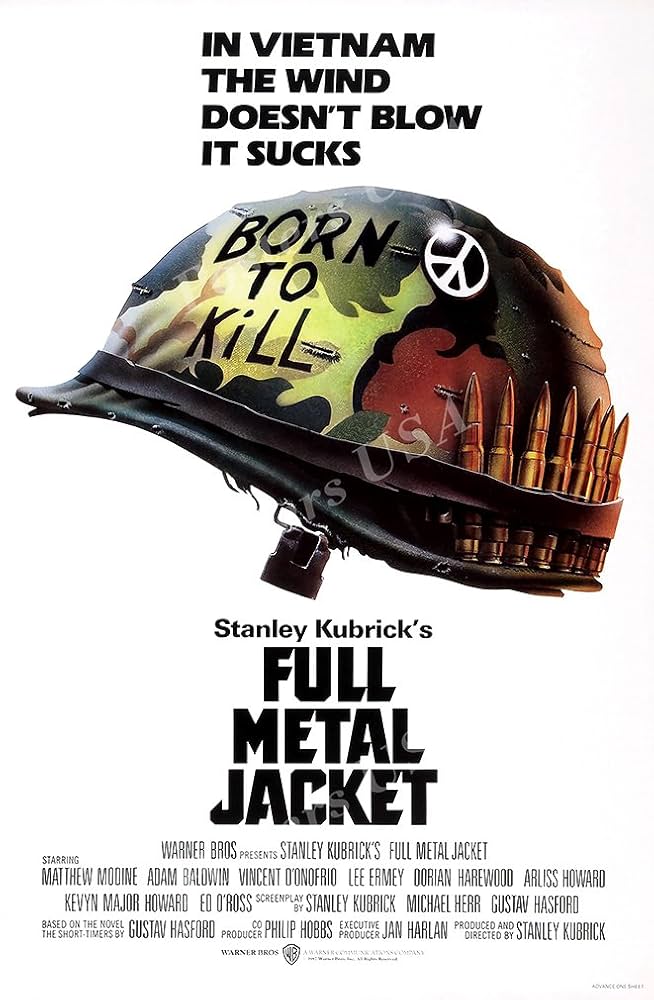
Full Metal Jacket is a 1987 war film directed and produced by Stanley Kubrick from a screenplay he co-wrote with Michael Herr and Gustav Hasford. The film is based on Hasford’s 1979 autobiographical novel The Short-Timers. It stars Matthew Modine, R. Lee Ermey, Vincent D’Onofrio, Adam Baldwin, Dorian Harewood, and Arliss Howard.
The storyline follows a platoon of U.S. Marines through their boot camp training at Marine Corps Recruit Depot Parris Island, South Carolina. The first half of the film focuses primarily on privates J. T. Davis and Leonard Lawrence, nicknamed “Joker” and “Pyle” respectively, who struggle under their abusive drill instructor, Gunnery Sergeant Hartman. The second half portrays the experiences of Joker and other Marines in the Vietnamese cities of Da Nang and Huế during the Tet Offensive of the Vietnam War.[7] The film’s title refers to the full metal jacket bullet used by military servicemen.
Full Metal Jacket was theatrically released in the United States on June 26, 1987, by Warner Bros., and in the United Kingdom on September 11, 1987. It was the last of Kubrick’s films to be released during his lifetime. The film grossed $120 million against a budget of $16.5–30 million and received positive reviews from critics. It was nominated for an Academy Award for Best Adapted Screenplay,[8] and was also nominated for two BAFTA Awards, while Ermey was nominated for a Golden Globe Award for Best Supporting Actor – Motion Picture for his performance. In 2001, the American Film Institute placed the film at number 95 in its poll titled “AFI’s 100 Years…100 Thrills.”[9]
DOWNLOAD
THE DEER HUNTER
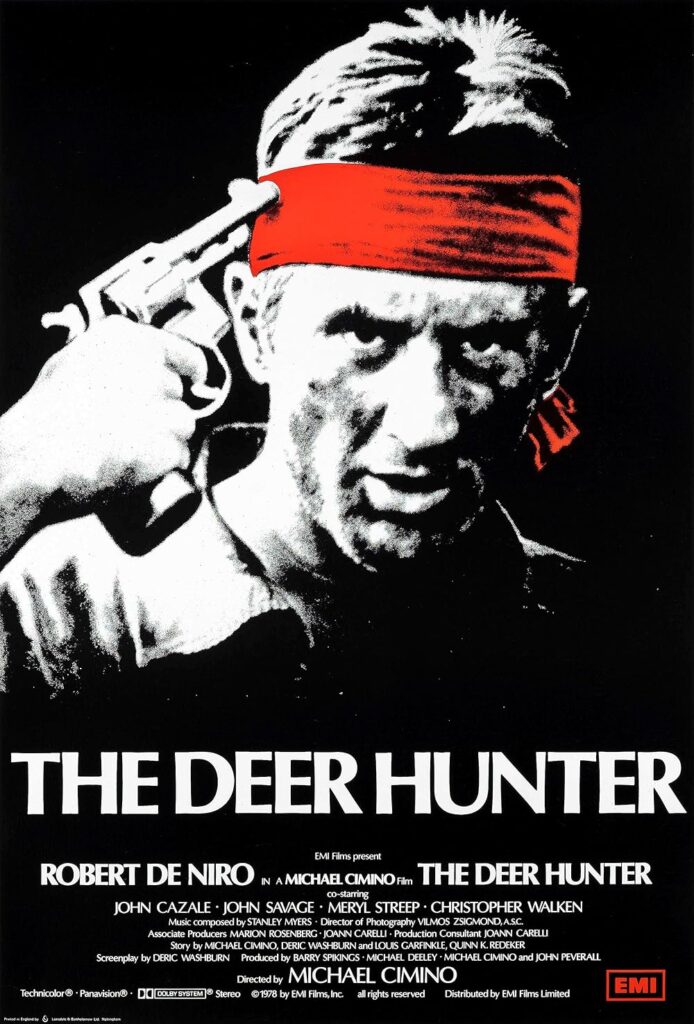
The Deer Hunter is a 1978 American epic war drama film co-written and directed by Michael Cimino about a trio of Russian-American[3][4][5] steelworkers whose lives are upended by fighting in the Vietnam War. The soldiers are played by Robert De Niro, Christopher Walken and John Savage, with John Cazale (in his final role), Meryl Streep, and George Dzundza in supporting roles. The story takes place in Clairton, Pennsylvania (a working-class town on the Monongahela River south of Pittsburgh) and in Vietnam.
The film is based in part on an unproduced screenplay called The Man Who Came to Play by Louis A. Garfinkle and Quinn K. Redeker about Las Vegas and Russian roulette. Producer Michael Deeley, who bought the script, hired Cimino, who, with Deric Washburn, rewrote the script, taking the Russian roulette element and placing it in the Vietnam War. The film went over budget and over schedule, costing $15 million. Its production company EMI Films released it in other territories, while Universal Pictures handled its distribution in the United States and Canada.
The Deer Hunter received acclaim from critics and audiences, with praise for Cimino’s direction, the performances of its cast, its screenplay, realistic themes and tones, and cinematography. It was also successful at the box office, grossing $49 million. At the 51st Academy Awards, it was nominated for nine Academy Awards, and won five: Best Picture, Best Director (for Cimino), Best Supporting Actor (for Walken), Best Sound, and Best Film Editing. It is Meryl Streep’s first Academy Award nomination (for Best Supporting Actress).
The Deer Hunter has been included on lists of the best films ever made, including being named the 53rd-greatest American film of all time by the American Film Institute in 2007 in their 10th Anniversary Edition of the AFI’s 100 Years…100 Movies list. It was selected for preservation in the United States National Film Registry by the Library of Congress in 1996, as being “culturally, historically, or aesthetically significant”.[6][7
DOWNLOAD
APOCALYPSE NOW
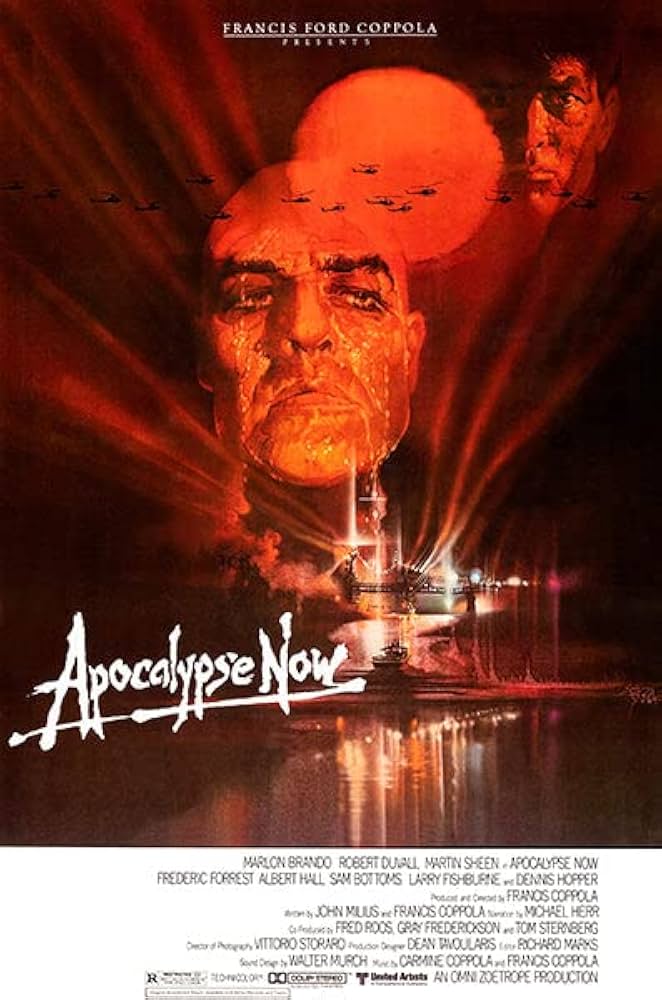
Apocalypse Now is a 1979 American psychological epic war film produced and directed by Francis Ford Coppola (credited as Francis Coppola). The screenplay, written by Coppola and John Milius, with narration by Michael Herr, is loosely inspired by the 1899 novella Heart of Darkness by Joseph Conrad, with the setting changed from late 19th-century Congo to the Vietnam War. The film follows a river journey from South Vietnam into Cambodia undertaken by Captain Willard (Martin Sheen), who is on a secret mission to assassinate Colonel Kurtz (Marlon Brando), a renegade Special Forces officer who is accused of murder and presumed insane. The ensemble cast also features Robert Duvall, Frederic Forrest, Albert Hall, Sam Bottoms, Laurence Fishburne, Dennis Hopper, and Harrison Ford.
Milius became interested in adapting Heart of Darkness for a Vietnam War setting in the late 1960s, and initially began developing the film with Coppola as producer and George Lucas as director. After Lucas became unavailable, Coppola took over directorial control, and was influenced by Werner Herzog‘s Aguirre, the Wrath of God (1972) in his approach to the material. Initially set to be a five-month shoot in the Philippines starting in March 1976, a series of problems lengthened it to over a year. These problems included expensive sets being destroyed by severe weather, Brando arriving on set overweight and completely unprepared, and Sheen having a breakdown and suffering a near-fatal heart attack on location. After photography was finally finished in May 1977, the release was postponed several times while Coppola edited over a million feet of film. Many of these difficulties are chronicled in the documentary Hearts of Darkness: A Filmmaker’s Apocalypse (1991).
Apocalypse Now was honored with the Palme d’Or at the Cannes Film Festival, where it premiered unfinished. When it was finally released on August 15, 1979, by United Artists, it performed well at the box office, grossing $80 million in the United States and Canada and $150 million worldwide. Initial reviews were mixed; while Vittorio Storaro‘s cinematography was widely acclaimed, several critics found Coppola’s handling of the story’s major themes anticlimactic and intellectually disappointing. The film was nominated for eight Academy Awards, including Best Picture, Best Director (Coppola), and Best Supporting Actor (Duvall); it went on to win Best Cinematography and Best Sound.
Apocalypse Now has been assessed as Coppola’s magnum opus and retrospectively considered one of the greatest films ever made. In 2000, the film was selected for preservation in the National Film Registry by the U.S. Library of Congress as “culturally, historically or aesthetically significant”. Coppola later released Apocalypse Now Redux, an extended re-edit of the film that contains multiple new scenes, in 2001. Another re-edit, Apocalypse Now Final Cut, was released in 2019 and is Coppola’s preferred version of the film.
DOWNLOAD
HAMBURGER HILL
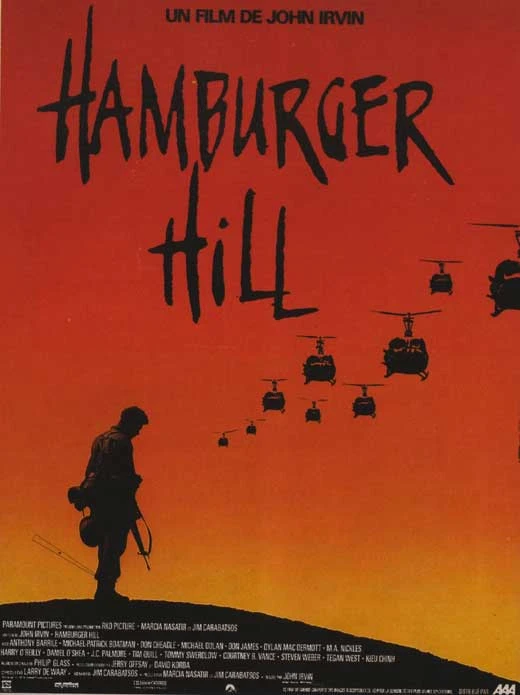
Hamburger Hill is a 1987 American war film set during the Battle of Hamburger Hill, a May 1969 assault during the Vietnam War by the U.S. Army‘s 3rd Battalion, 187th Infantry, 101st Airborne Division, on a ridge of Dong Ap Bia near the Laotian border in central Vietnam. The ridge was a well-fortified position, including trenchworks and bunkers, of the North Vietnamese Army. U.S. military records of the battle refer to the mountain as “Hill 937,” its map designation having been derived from the high elevation of the hill at 937 meters (3,074 ft).
Written by James Carabatsos and directed by John Irvin, the film starred Michael Boatman, Don Cheadle, Dylan McDermott (his film debut), Courtney B. Vance, Steven Weber and Tim Quill. It was produced by RKO Pictures and distributed by Paramount Pictures, and was shot in the Philippines. The novelization was written by William Pelfrey.
DOWNLOAD
APOCALYPSE NOW
REDUX
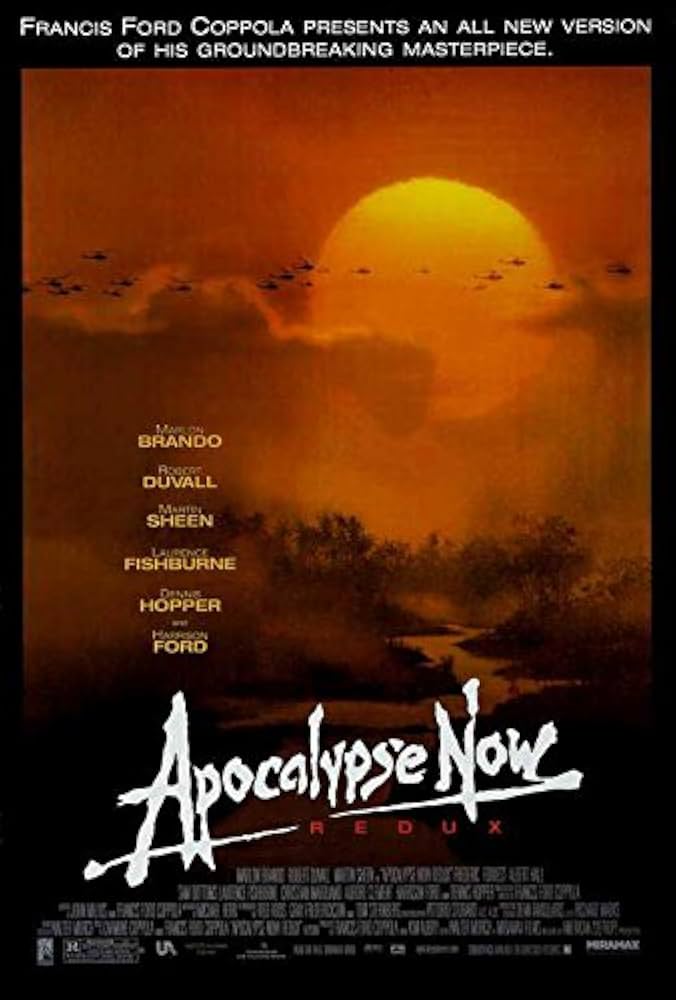
Apocalypse Now Redux is a 2001 American extended version of Francis Ford Coppola‘s epic 1979 war film Apocalypse Now. Coppola, along with editor and longtime collaborator Walter Murch, added 49 minutes of material that had been removed from the initial theatrical release. It is a significant re-edit of the original version. The cut premiered at the 2001 Cannes Film Festival on May 11, 2001 and was released on August 3, 2001 by Miramax Films.
DOWNLOAD
SAVING PRIVATE RYAN
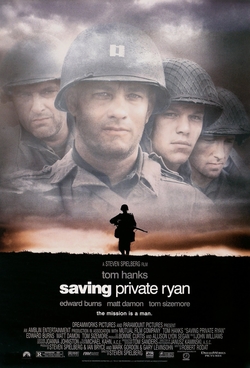
Saving Private Ryan is a 1998 American epic war film directed by Steven Spielberg and written by Robert Rodat. Set in 1944 in Normandy, France, during World War II, it follows a group of soldiers, led by Captain John Miller (Tom Hanks), on a mission to locate Private James Francis Ryan (Matt Damon) and bring him home safely after his three brothers have been killed in action. The cast also includes Edward Burns, Tom Sizemore and Jeremy Davies.
Inspired by the books of Stephen E. Ambrose and accounts of multiple soldiers in a single family, such as the Sullivan brothers and the Niland brothers, being killed in action, Rodat drafted the script, and Paramount Pictures hired him to finish writing it. The project came to the attention of Hanks and Spielberg, whose involvement, due to their previous successes, secured the project’s development. Spielberg wanted to make Saving Private Ryan as authentic as possible and hired Frank Darabont and Scott Frank to do uncredited rewrites based on research and interviews with veterans. The main cast went through a week-long boot camp to help them understand the soldier’s experience. Filming took place from June to September 1997, on a $65–70 million budget, almost entirely on location in England and Ireland. The opening Omaha Beach battle was the most demanding scene, costing $12 million to film over a four-week period, and using 1,500 background actors.
Released on July 24, 1998, Saving Private Ryan became one of the year’s most successful films, earning critical acclaim for its graphic portrayal of combat. WWII veterans described the combat scenes as the most realistic portrayal of their own experiences they had seen; some said they had been unable to watch it due to their traumatic memories. The film earned $481.8 million, making it the second-highest-grossing film of 1998, and went on to win many accolades, including Golden Globe, Academy, BAFTA, and Saturn awards.
Considered one of the greatest war films ever made, Saving Private Ryan‘s battle-scene filming techniques inspired many subsequent war, action, and superhero films, and numerous directors have cited Saving Private Ryan as an influence on them. The picture is credited with having helped to renew interest in WWII at the turn of the century, inspiring other films, television shows, and video games set during the war. In 2014, the film was selected for preservation in the United States National Film Registry by the Library of Congress as “culturally, historically, or aesthetically significant”.
DOWNLOAD
SANDS OF IWO JIMA
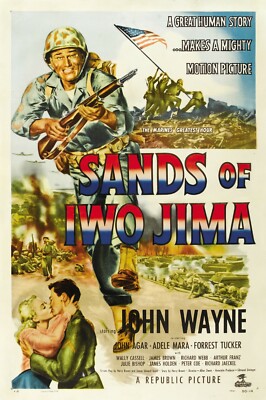
Sands of Iwo Jima is a 1949 war film starring John Wayne that follows a group of United States Marines from training to the Battle of Iwo Jima during World War II. The film, which also features John Agar, Adele Mara and Forrest Tucker, was written by Harry Brown and James Edward Grant, and directed by Allan Dwan. The picture was a Republic Pictures production.
Sands of Iwo Jima was nominated for Academy Awards for Best Actor in a Leading Role (John Wayne), Best Film Editing, Best Sound Recording (Daniel J. Bloomberg) and Best Writing, Motion Picture Story.[3]
DOWNLOAD
MIDWAY
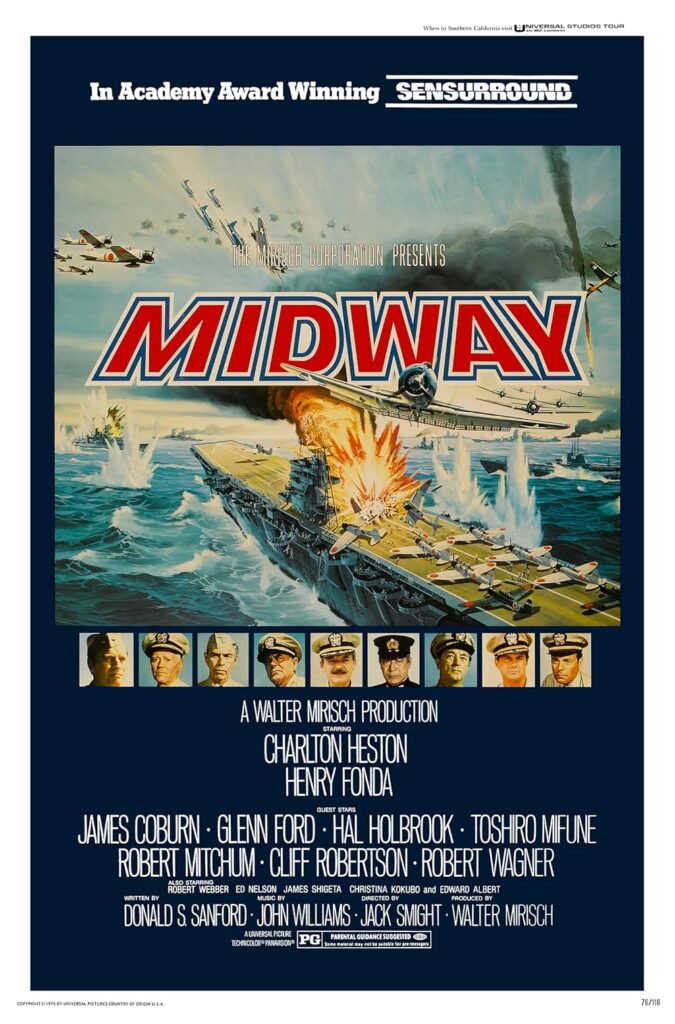
Midway, released in the United Kingdom as Battle of Midway, is a 1976 American war film that chronicles the Battle of Midway, a turning point in the Pacific War of World War II. Directed by Jack Smight and produced by Walter Mirisch from a screenplay by Donald S. Sanford,[2][3] the film starred Charlton Heston and Henry Fonda, supported by a large international cast of guest stars including James Coburn, Glenn Ford, Ed Nelson, Hal Holbrook, Robert Webber, Toshiro Mifune, Robert Mitchum, Cliff Robertson, Robert Wagner, Pat Morita, Dabney Coleman, Erik Estrada and Tom Selleck.
The film was made using Technicolor, and its soundtrack used Sensurround to augment the physical sensation of engine noise, explosions, crashes and gunfire. Despite mixed reviews, particularly involving the use of stock footage and an unnecessary romance subplot, the music score by John Williams and the cinematography by Harry Stradling Jr. were highly regarded; as evidenced when Midway became the tenth most popular movie at the box office in 1976.
DOWNLOAD
THE GREEN BERETS
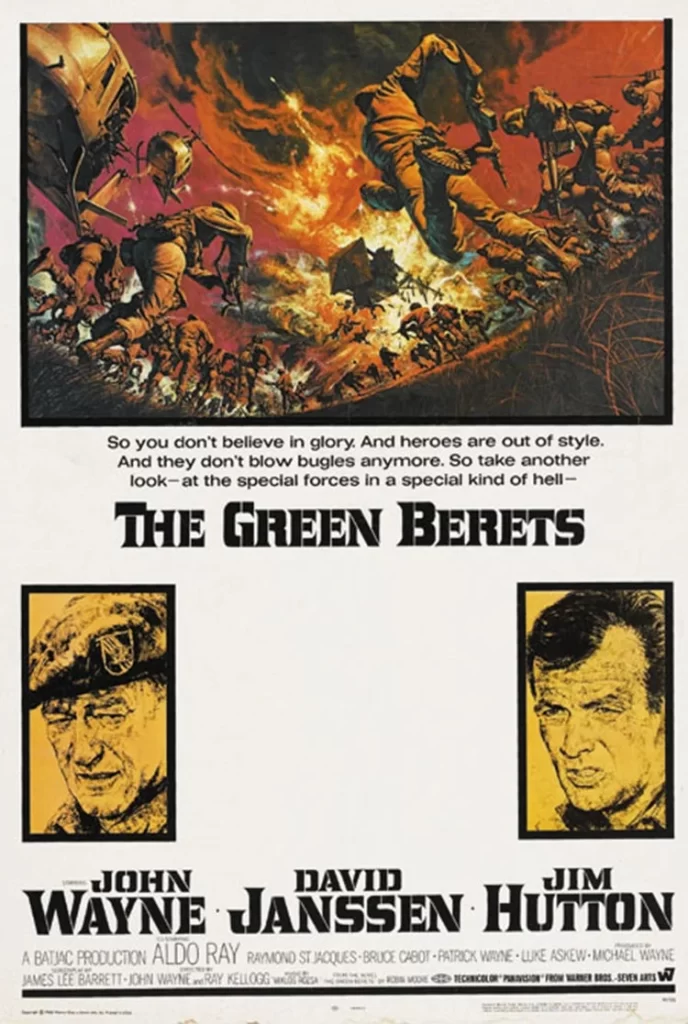
The Green Berets is a 1968 American war film directed by John Wayne and Ray Kellogg, and starring Wayne, David Janssen and Jim Hutton, based on the 1965 novel by Robin Moore. Much of the film was shot in the summer of 1967. Parts of the screenplay bear little relation to the novel, although the portion in which a woman seduces a North Vietnamese communist general and sets him up to be kidnapped by Americans is from the book.
The Green Berets is strongly anti-communist and pro-South Vietnam. It was released at the height of American involvement in the Vietnam War, the same year as the Tet Offensive against the largest cities in South Vietnam. John Wayne was so concerned by the anti-war sentiment in the United States, he wanted to make this film to present the pro-military position. He requested and obtained full military cooperation and materiel from President Lyndon B. Johnson and the United States Department of Defense. John Wayne bought the film rights to Robin Moore’s book for $35,000 and 5% of undefined profits of the film.[2]
The film was a financial success at the box office, but received almost universally negative reviews from critics.[3][4]